




In building a healthy home, a wall is not simply just the finish surface to paint in your favorite color. It can also contribute to the moisture management system, of an exterior wall when all layers are working together as a system. The finished material used plays a central role in how well the entire assembly performs over time, as it relates to the interior surface of exterior walls, but is an equally important selection for interior walls, especially those that may be in more moisture-prone areas like bathrooms or laundry rooms.
Interior wallboard selection is one of the most under-considered decisions in healthier homebuilding. It’s often not even an architectural discussion and is pushed off to the interior design team to select based on the desired aesthetic of the finished wall. Commonly selected as interior wall paneling, wallpaper finish, stacked stone interior walls, etc. What is missed, is the substrate or wallboard material behind the beautiful finish is critical and should be an entire Design/Build team discussion.
Without thoughtful discussion, you’ll likely find a stack of paper-faced drywall on your jobsite when it’s time to hang drywall. Conventional paper-faced drywall has dominated the market for decades, not because it is the best-performing option, but because it is the most familiar by trades, cost-effective and viewed as a commodity to homebuilding. The truth is your wallboard (or drywall) selection DOES play a role in the performance of your walls, not only from a durability perspective but for occupant health as well.
For purposes of this article, you’ll find I often use wallboard and drywall interchangeably. It’s sure to drive some building science guys nuts, but as a contractor and construction consultant on high-performance homes nationwide, I’ll give myself the permission here to reference them interchangeably with the disclaimer so you and I can be on the same page.
This resource walks through four interior wallboard materials across multiple performance and health categories.
Standard gypsum board, is manufactured from a calcium sulfate dihydrate core encased on both faces by cellulose paper. It is the most widely installed interior wall finish in North American residential construction. A standard 4×8-foot sheet runs $0.40 to $0.70 per square foot in just material costs, and virtually every licensed drywall contractor in the country is trained to install and finish it.
For dry, conditioned interior spaces like bedrooms, living rooms, hallways, home offices, it performs well. Good, clean, dry conventional building materials can perform really well, just don’t get it wet!
Conventional paper-faced drywall is simple to hang, tape, mud and texture well. It loves just about all interior paints.
Paper is an organic material, which means it provides a food source for fungal growth. When exposed to sustained humidity or direct moisture, the paper facing supports growth. The gypsum core compounds the problem by absorbing water readily, softening, and losing structural integrity when saturated.
Once conventional drywall gets wet and stays wet, remediation is often not a viable repair; it's more commonly a remediation, replacement and new install. If selecting standard paper-faced drywall it should be exclusively for dry, controlled interior environments. Using it in bathrooms, laundry rooms, basements, or any climate-exposed space without a solid moisture management plan can lead to remediation trouble.
Paper-faced drywall or paper-faced anything is simply not forgiving to moisture.
Moisture-resistant gypsum board, commonly called “green board” or “purple board” depending on the manufacturer, is an ASTM C1396-compliant product in which both the gypsum core and paper facing are treated with moisture-resistant additives during manufacturing. This often includes wax and fungicides. The surface is typically tinted green or purple to visually distinguish it from standard board.
It costs modestly more than standard paper-faced drywall, typically $0.50 to $0.85 per square foot in materials, and the installation costs are nearly the same as conventional drywall. It is widely used for bathrooms, laundry rooms, and kitchens as a code-compliant way to provide “moisture-resistant” material to vulnerable areas.
Green board is moisture-resistant. It is not moisture-proof, and more importantly, it is not a waterproof material.
ASTM C1396 moisture-resistant board is intended to tolerate intermittent humidity and incidental splash exposure. It is not rated for wet area applications like tub/shower enclosures.
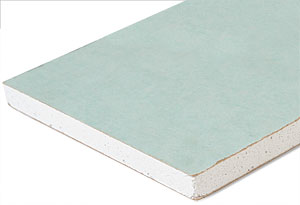
Up until 2006, the International Residential Code (IRC) permitted the use of green board as a tile backing within tub/shower enclosures. That led to some significant failures with water damage material within tub/shower areas.
The International Residential Code (IRC) Section R702.4.2 now explicitly prohibits its use as a tile substrate or in continuously wet areas without a compliant waterproof membrane. Despite this, it is routinely installed in shower walls, steam room adjacencies, and below-grade applications where it will be exposed to conditions it was never designed to handle.
The facing is still paper, just with a fungal inhibitor.
First, we need to address the first generation of MgO Boards which was the Magnesium Chloride variety. The Magnesium and Chloride (MOC) combination created some pretty big failures that resulted in corrosion of fasteners and a “weeping” phenomenon, that would cause the walls to weep salty liquid.
The problem was Magnesium chloride is hygroscopic, it attracts and absorbs water vapor from the surrounding air. In boards where manufacturing left residual chloride salts in the cement mix, these salts begin absorbing moisture in the interior air environment. At high enough relative humidity (RH) levels, a process called deliquescence would occur: the salts absorb enough moisture to dissolve themselves, forming a concentrated brine solution within the panel and would visibly weep down the wall.
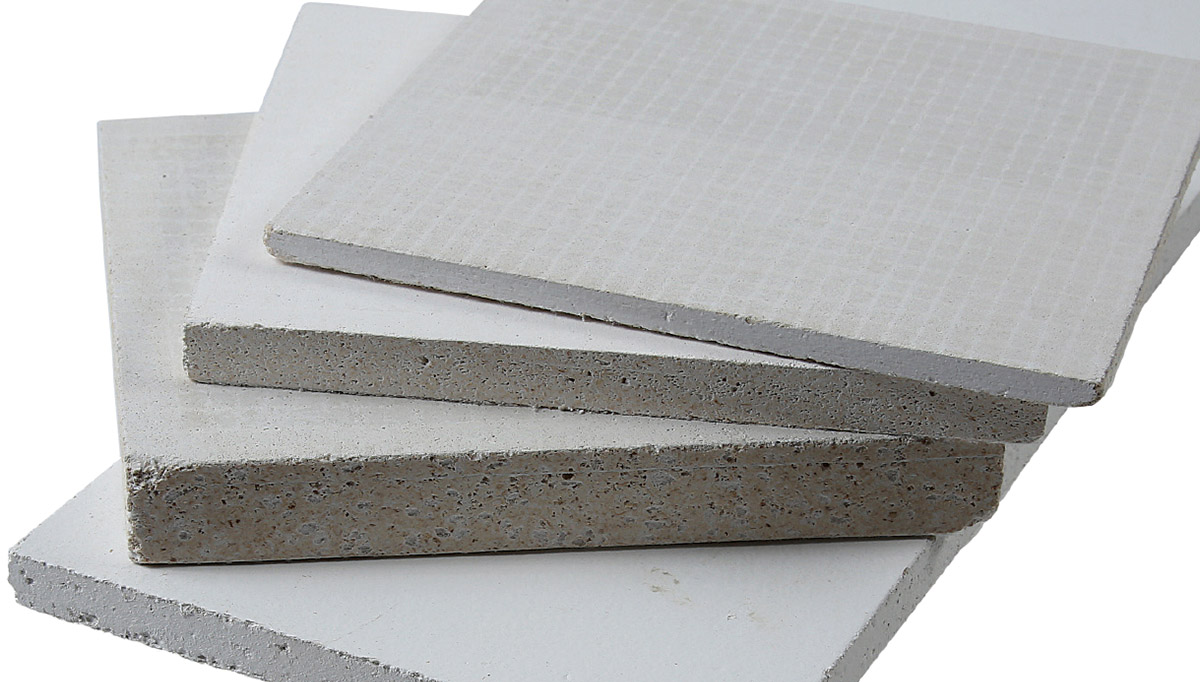
The industry’s response to the chloride failure problem was the development of magnesium oxysulfate (MOS) cement board, in which magnesium sulfate replaced magnesium chloride as the binding agent. These products are marketed as “chloride-free” MgO board and represent a meaningful improvement over the first-generation formulation.
Magnesium sulfate does not share the hygroscopic properties of magnesium chloride. MOS boards do not pull moisture from the air, do not produce corrosive leachate, and maintain stable performance. Comparative testing shows MOS boards absorb approximately 37 percent less moisture than the first-generation MOC boards under high-humidity conditions.
A high-quality MOS board can withstand more than 100 days of continuous water submersion without delamination. In flood-prone zones, this means panels can often be cleaned, dried and reused after a water intrusion event rather than replaced, which is a genuine long-term cost advantage if in flood-prone or hurricane-prone climates.
Sulfate-based MgO board is a high-performance product for high-demand applications. It can be a strong consideration for coastal construction and in marine environments, below-grade and flood-zone assemblies, fire-rated corridors and commercial applications.
For standard residential applications, however, the cost-benefit equation presents a meaningful hurdle. Material costs run $1.50 to $3.50 per square foot, and the installation premium is significant: MgO board requires specific cutting tools, specialty corrosion-resistant fasteners, and MgO-compatible joint compounds and alkali-resistant primers. Installed costs are high, next I want to share with you one of my favorite solutions that pairs performance with moisture resistance and installation ease.
Important: If specifying any MgO board product, require the manufacturer to provide an ICC-ES Evaluation Service Report (ESR) for the specific product being installed. The ICC 1125 Standard for Classification of Magnesium Oxide Boards is the applicable benchmark for North American construction. Generic or uncertified MgO board without an ESR should not be used, as it carries unverified performance claims and real liability exposure.
Interior glass mat fiberglass-faced gypsum board shares the same calcium sulfate core as standard gypsum products, but replaces the cellulose paper facing with an inorganic fiberglass mat embedded directly into the gypsum surface.
Fiberglass is entirely inorganic, and I’m not talking about the loose fiberglass fill that is easily airborne in indoor environments. The fiberglass mat is embedded in the gypsum. It provides no cellulose (confirm with manufacturer), no paper-based materials, no nitrogen, and none of the organic compounds that fungal growth loves to feed on. The facing that represents the primary failure point of both paper-faced drywall and green board is simply absent. In its place is a surface that is dimensionally stable and moisture-tolerant
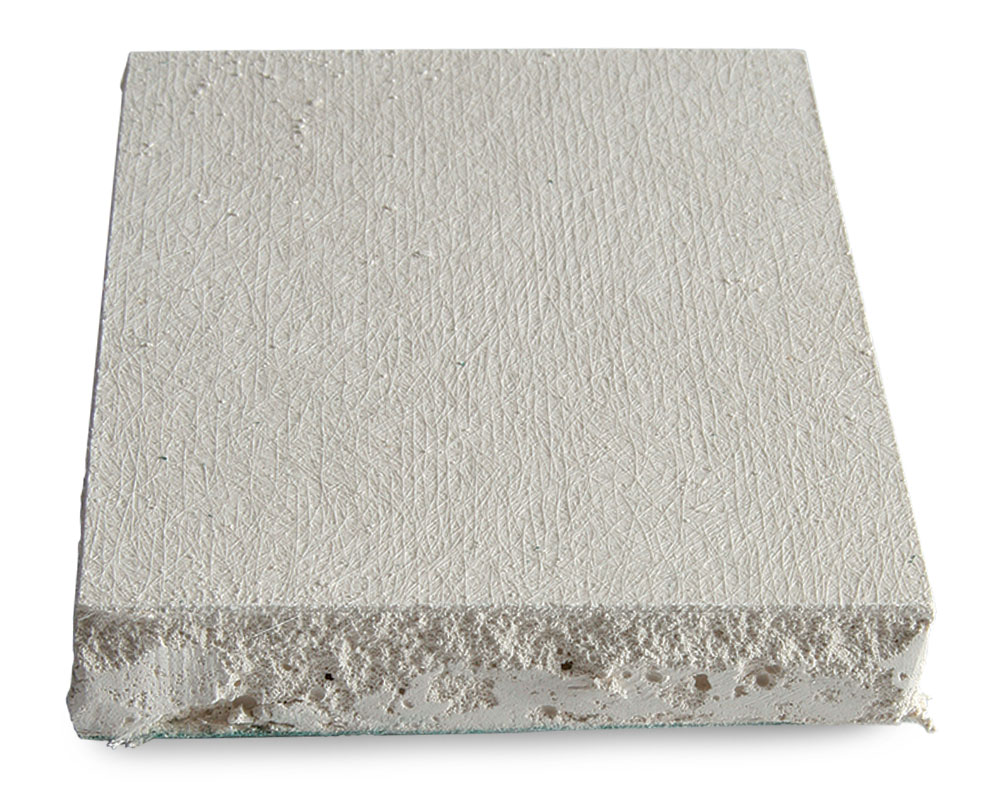
In ASTM D3273 testing, the industry’s standard benchmark for mold resistance on interior wall surfaces, glass mat fiberglass gypsum board consistently scores a 10 out of 10, indicating no fungal growth under sustained moisture conditions. This is the same score achieved by MgO board, and it is achieved without the chemical complexity, installation requirements, or cost premium that MgO board demands.
Fire performance is often equivalent to standard gypsum board: 1-hour rated in standard formulations, with Type X versions available for 2-hour assemblies. Bending strength is comparable to standard drywall.
This is where glass mat fiberglass board separates itself as a super star from MgO board as a practical alternative to conventional paper-faced drywall. Glass mat gypsum installs comparably to standard paper-faced drywall. It cuts with a standard utility knife and a straightedge. It fastens with standard drywall screws. It accepts standard joint compound and standard paint systems with a quality alkali-resistant primer. No specialty tools. No specialty fasteners and often no premium labor rate.
Through the Holistic Homes Lens: The question is not whether glass mat gypsum costs more than standard drywall. It does, by about 2x. The question is whether it costs less than the failure it prevents and the peace of mind a more robust material brings. For most residential applications, glass mat fiberglass-faced gypsum board represents a strong balance of upfront cost, installation simplicity, long-term moisture and mold performance, and long-term value
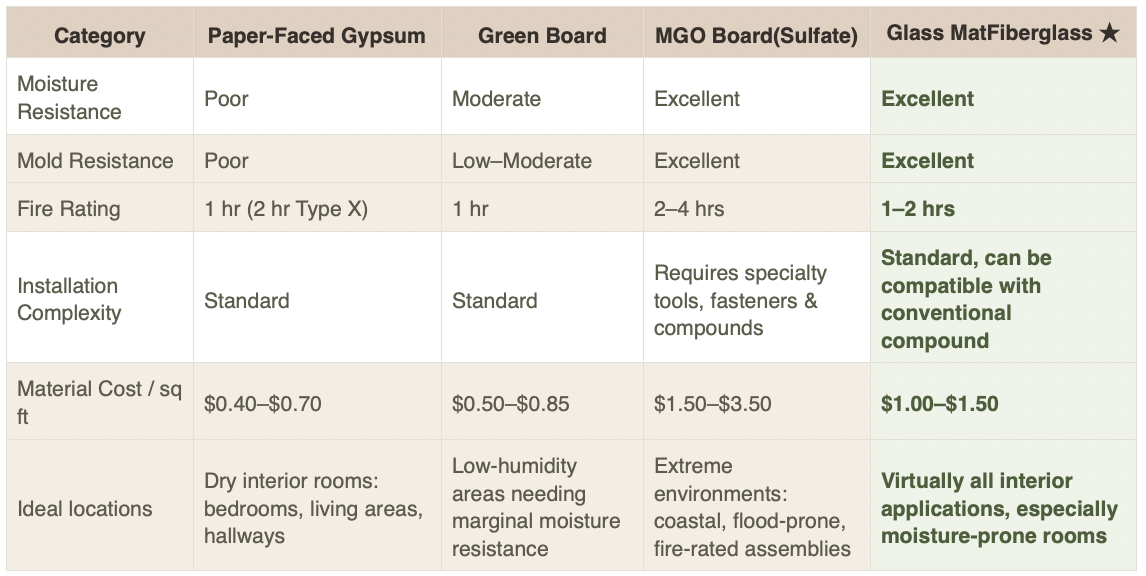
The performance differences between these four materials are not marginal in performance or in costs. They represent fundamentally different approaches to moisture management at the wallboard layer, along with fire safety, toxicity concerns and long-term durability. The right choice depends on the environment and the specific room.
It’s not uncommon for us to propose 2-3 different wallboard materials for an entire home for our consulting projects.
Appropriate for dry, controlled interior spaces where moisture exposure is not a factor: bedrooms, living areas, and interior hallways. It should not be used in any room where humidity fluctuates or water exposure is possible.
Appropriate as a modest upgrade in low-humidity areas where incidental splash exposure is possible. It is not appropriate as a substitute for glass mat gypsum in bathrooms or wet-area adjacencies, and it should never be used as a tile substrate, it is far too vulnerable to moisture damage if it encounters sustained moisture. It comes with limitations, risks and possible toxicity concerns with fungal inhibitors.
A legitimate high-performance option for demanding applications: coastal and marine construction, flood-prone zones, commercial fire-rated assemblies, and industrial environments. For standard residential applications, the installed cost premium relative to glass mat gypsum is difficult to justify. The MgO chloride-based wallboard is known to have significant issues and should be avoided in new construction or renovation applications. If you discover the chloride-based variety is in an existing home, assess for weeping and fastener corrosion before assuming it is still a suitable material.
The most practical high-performance option for the broadest range of residential applications. It eliminates the organic failure mode of paper-faced products, installs with standard tools and labor, accepts standard finishing systems, and does so at a cost premium that is far smaller than the cost of the failures it prevents. For homeowners and their contractors evaluating interior wall materials, glass mat fiberglass-faced gypsum board should be the default specification for any room with meaningful moisture exposure — and a strong candidate for every interior application where long-term performance matters.
Your family deserves a safe, healthy home. Let’s start planning together.
Start Your Journey